She walks into the cold, dark room as the sanitary paper crinkles underneath you from the slight re-positioning to accommodate this growing body of yours. She looks at you first, then your husband and cheerily asks “are you two ready?” You both nod ‘yes’; this is a moment you’ve wanted for so long. “Alright” she says, “this gel is going to feel cold and slippery on your belly but very quickly, you’ll be able to see your baby on that screen.” You turn your head, holding your husband’s left hand, while he holds his iPhone in his right. Within a nano-second of the ultrasound wand touching your lower belly, a fuzzy black and white pixelated outline of a developing human appears. Within another 5 minutes, the unborn child will make it’s first appearance on social media via an instagram post.
The Uncomfortable Truth About Parents Using Their Kids in Their Own Social Media.
How often does the above story happen in modern society? How often do we think about what it means that children exit the womb already having a digital footprint?
Nowadays, this tough question gets asked of me from time to time: Why don’t you post more about your kids on Social Media?
In some ways it’s an easy one to answer. While I understand my decision to not often post about my children online will cause disagreement, my aim is to show a reasoning that’s evidence informed. Currently, it appears the data supports my opinion to limit their social media exposure. However, that could change as time goes on; nothing written in stone. I reserve the right to change course.
While I may post a picture or two of my children doing things together as a family, the last few years of social media data (and personally seeing how it’s warped human brains) has given me pause. I used to be a lot freer with showing them off…but that changed a while back. The overarching reason that I DON’T post much about them, particularly their accomplishments ( of which there are many), is because my love for them and their value as people does not come from what they achieve. My infinite love for them is because they’re my children! That won’t change based on wins/losses, how many “likes” they receive on a post, or the perception of people whose opinion I don’t care about. While that may sound harsh, it’s the truth.
But here’s the Catch-22 – there ARE social media posts involving the children of friends that I love seeing. Those posts are usually true praise for their child, offered in the right direction and with pure intent; it’s hard to not have a reactive smile to them. Others though… others are obvious ploys for low-rung interaction by an attention-starved parent whose value and self-worth comes from a shallow place.
So, in my reluctance to post about my children, here’s some evidence I’m also reluctant to share: OH yes..I present a stupid picture of me of when I was a kid. I’m thrilled social media wasn’t around during these tender years, for this very reason. How could a kid be expected to overcome this kind of parent-forced humiliation? I could drop the mic, and that would be a sufficient explanation as to why I spare my children this kind of embarrassment… none of us had a choice in these decisions did we?? The hair. The outfit. The cheesybackground. How fair is that? Imagine being presented to the world in this manner, not having any say in it, and it being permanent/searchable record? ( Not that my choice would have been any better) but that’s not the whole story.

Here’s more compelling evidence – if you’re a parent, I would invite you to do a quick Google image search using a picture of your child. See what gets returned. I would bet you’d be shocked. Even scared by the information and pictures you’d find.
The negative data trends on kids and social media usage isn’t a secret, but like many of the dopamine giving activities that we know are bad for us, we do it anyway. We have to ask ourselves – do we really want this for our kids? The evidence is damning.
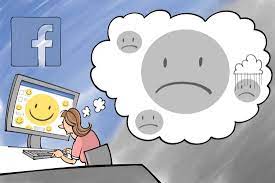
The CDC bi-annual risk report published in 2022 showed that most teen girls (57%) now say that they experience persistent sadness or hopelessness (up from 36% in 2011), and 30% of teen girls now say that they have seriously considered suicide (up from 19% in 2011). Teen boys have also suffered disturbing trends since 2011 but haven’t fared as poorly in those two same categories. These mental health statistics are easily linked to social media usage. ( and their adult parents haven’t fared any better I might add; as pointed out in the Social Media series, previously).
Parents also feel pressure to curate an online image of their lives to mimic others in their communities. You’ve seen the “first day of school” pictures of a million kids, and that ubiquitous chalkboard outlining “what they want to be when they grow up.” For any of us that had that same 1st day of school pic taken of us, did we ever dig out of the shoe box? ( And if we did… why? Did any of us really care? So why do parents feel such pressure to publicly signal their conformity?). Parents often post these without thinking, because “it’s the thing to do”, but let’s challenge ourselves to ask ourselves “why”, and give an honest answer.
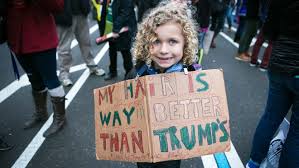
The last few years, and even more so since the pressure cooker Summer of 2020, we’ve seen the disturbing trend of children being used as pawns for “social’ and ‘political’ causes they know nothing about; being taken to protests, and worse, being taught at a very early age to have disgust for those that think differently than them. Parents then proudly post pictures of their kids holding protest signs and marching as click-bait virtue signaling for their own selfish need for likes. This phenomenon is new and knowing how children might take this behavior into adulthood is more than enough cause to steer clear of the social media trap.
As parents, we already have an outsized influence on what our children will be; including all of our not so savory parts. They are around us more than any other humans in their early years and share our genetics so it makes sense that the ratio of donated characteristics from us is heavily weighted. Because of that fact, it makes sense to model behavior that you’d want to see. For example, there’s been a victimhood mentality that’s become fashionable, no doubt, because of Social Media. So many adults now introduce and describe themselves as “as a person who…”, “as a victim of…”, “as a survivor of…”. If children see their parents, celebs, and their peers outwardly expressing a victim identity, and believing there is value in it, they mimic it. We now have multi-generational usage of their own emotional reactivity as proof of “truth.”
It seems now that people feel they are entitled to ALL information about your children since it’s offered up so freely by other parents through social media. An acceptance of a friend request or follow does not equal a search warrant. Whatever I might post about my children allows for judgment by the viewer. Pictures, statements, will be interpreted with judgmental eyes, as that’s what humans do. They make instant comparisons to themselves – their friends – their own kids – their own childhoods -as that’s what humans do. Their judgment might invite a sense of envy ( as social media stokes this deadly sin like no other). A quick scroll past a picture and blurb about a child shouldn’t give anyone the right to assume their history, their future, “what kind of kid they are” and should give them pause to ask if this portrayal is anywhere near accurate ( as we know that social media portrayal vs reality are quite different). If social media teaches any behavior, it’s shallow and immediate judgment trumps critical thinking. “Oh, I like that dress on her. I bet she’s a nice girl.” ( No doubt you’ve heard this out loud). “How do they afford to put those kids in those clothes?” ( stoking envy.) “Their son has no business being on the travel team.” ( Causing a parent to lash out at coaches and administrators). I don’t wish to invite that kind of cheap judgment upon my children.
Going back to that stupid picture of me as a kid….So in the context of my own kids, I asked myself – “is it fair?”. Would I want my parents making public posts about me? Even if it was to boast about an accomplishment and they were “positive”, should a parent be responsible for curating a public image of their child with the child having absolutely no say in the matter? And what does this show a young person? It tells them that the low-rung snap judgments of people you know, barely know, used to know, or don’t even know are of the utmost importance. That’s not a life priority I wish to impart upon my children.
Will it always be this way? Will I keep my kids’ exposure limited? … the truth is… I don’t know. There may be compelling reasons in the future to change course, but right now, there is not. As mentioned, there are parents out there doing it with the purest of intentions, but as history shows, intentions and outcomes don’t necessarily line up; I understand why they want the world to know about the thing they love most on Earth – their child(ren). Right now though, the current conditions don’t suit me. (*NOTE: if you post a lot about your child – you should absolutely continue doing it if you’d like to- my opinion really shouldn’t matter, but I would ask of you to think about why you’re doing it.) Conditions change. Technologies change. People change. That may cause my actions to change. For now, my kids will have to continue knowing that I love them more than life itself by my direct interaction with them, and not a third party mediator trying to monetize our memories to sell shoes, smartwatches, makeup, or whatever ephemeral item – I’m happy to have the REAL thing.
 Andrew L Hamilton